
 Available in US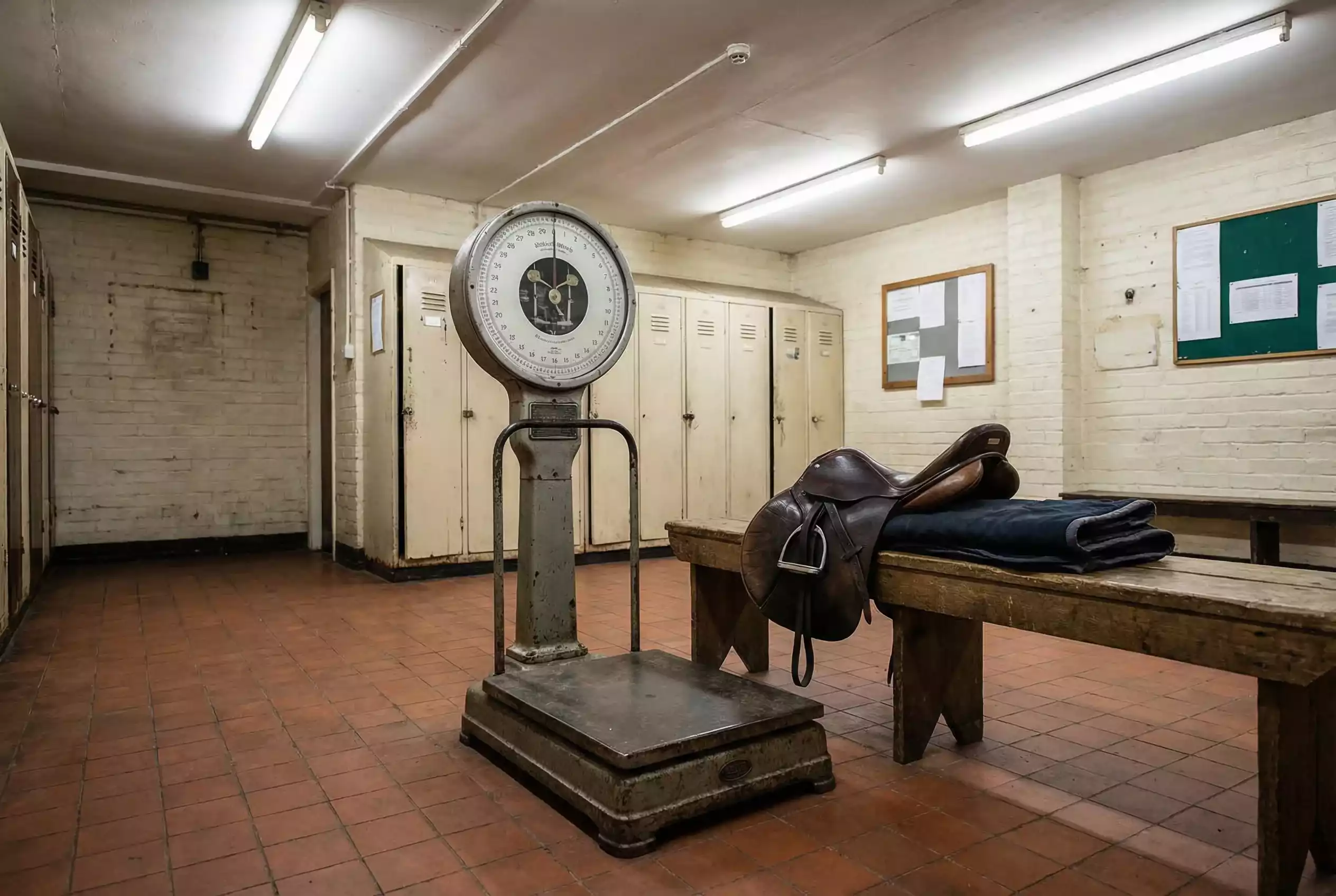
Why Standard Going Changes the Form Equation
On turf, three variables dominate the form analyst’s thinking: the going, the weight carried, and the class of the race. At Wolverhampton, one of those variables is essentially switched off. The Tapeta surface produces going that is classified as “standard” at virtually every meeting, which removes the single biggest source of form distortion in British racing. What remains — weight and class — becomes proportionally more important, and the form factors at Wolverhampton reward a recalibrated analytical approach. Going, Weight, and Class at Wolverhampton — More on this topic at wolverhampton race betting.
The absence of going variation is not a minor detail. On turf, the going can swing a horse’s speed figure by ten or more points between good ground and heavy, and assessing whether a horse “wants” soft or firm conditions is a core skill. At Wolverhampton, that skill is redundant. The analytical bandwidth that turf bettors devote to going assessment can be redirected to weight analysis and class evaluation — two factors that are more stable, more quantifiable, and more consistently rewarded at this venue.
Weight Allowances and Penalties
Weight is the handicapper’s primary tool for levelling the field. In a handicap, each horse’s carried weight is derived from its official rating: the higher the rating, the more weight it carries. The BHA scale specifies that one pound of weight equals approximately one length over a mile, though the exact equivalence varies by distance and conditions. At Wolverhampton, where the surface consistency eliminates the going variable, weight differentials tend to play out more predictably than on turf — a horse carrying three pounds less than a rival of similar form has a genuine, measurable advantage.
Weight-for-age allowances add a further layer. In races that mix age groups — a common scenario at Wolverhampton, particularly in the autumn when three-year-olds meet older horses on the all-weather for the first time — younger horses receive an allowance that reduces their carried weight. The scale is set by the BHA and varies by month and distance. In October, a three-year-old racing against four-year-olds over a mile receives a significant weight pull; by the following March, the allowance has narrowed as the age gap becomes less meaningful. Bettors who check the weight-for-age scale before assessing a mixed-age race at Wolverhampton gain an edge over those who simply read the racecard weight at face value.
Jockey claiming allowances are the other weight adjustment to track. Apprentice jockeys are entitled to a weight reduction — typically 3lb, 5lb, or 7lb depending on the number of winners they have ridden. At Wolverhampton’s evening cards, where leading jockeys are less frequently booked, apprentice riders appear regularly. A 5lb claimer on a horse whose form is close to the top of the race can represent genuine value: the weight reduction is tangible, and the rider’s knowledge of the track may be strong if they ride the evening circuit frequently.
Penalties are the reverse of allowances. A horse that has won recently may be required to carry additional weight in its next start — typically 3lb to 7lb depending on the conditions of the race and when the win occurred. A recent winner carrying a penalty at Wolverhampton may still be the best horse in the field, but the extra weight narrows its margin and increases the chance that a rival can overhaul it. Checking for penalties on the racecard is a quick exercise that sometimes flags a favourite whose price does not account for the additional burden.
Going on All-Weather: Why It Barely Matters
The official going at Wolverhampton is recorded as “standard” at the vast majority of meetings. Occasionally it may be described as “standard to slow” — typically in very cold conditions when the wax component of the Tapeta stiffens slightly, or after a particularly intensive block of fixtures when the surface is due for maintenance. The difference between “standard” and “standard to slow” is marginal and rarely material for betting purposes.
This is a radical simplification compared to turf racing, where the going can range from “firm” to “heavy” within a single season at the same course, and where each point on the scale fundamentally changes which horses are advantaged. On turf, an entire category of form analysis — going preference — is devoted to matching horses with their preferred ground conditions. At Wolverhampton, that category effectively does not exist. A horse that has run its five most recent races on the same going at the same venue is giving you five directly comparable data points, which is a luxury that turf form analysis almost never provides.
The practical implication for bettors is significant: you can trust the form book at Wolverhampton to a degree that is simply not possible on turf. A horse that has finished third, second, first in its last three runs at the venue is on a genuine upward curve, not one that has been flattered by encountering ideal ground conditions on its most recent start. This reliability makes trend-spotting easier and reduces the number of “hidden” excuses that explain away poor form on turf.
One exception to note: the first meeting after an extended maintenance break can sometimes ride differently, as the freshly worked surface settles over the first few races. Watching the early results on such a card — are times faster or slower than expected? — provides a minor but useful calibration for later bets on the same day.
Class Drops and Rises: Finding the Sweet Spot
Class is the third form factor, and at Wolverhampton it may be the most exploitable. The British handicap system classifies races from Class 2 at the top to Class 7 at the bottom, and a horse moving between classes is making a statement about its connections’ intentions and its current level of ability. With the horse population in training falling to 21,728 in 2025 — a decline of 2.3 per cent according to the BHA Racing Report — there is more churn between classes as trainers adjust to smaller field sizes and fewer available races at each level.
A class drop — a horse moving from, say, Class 4 to Class 5 — is one of the most commonly backed angles in racing. The logic is intuitive: a horse that has been competing against better animals should find an easier race more straightforward. At Wolverhampton, where handicaps at Class 5 and Class 6 dominate the card, class droppers from the tier above appear regularly and win at a rate that justifies attention. The key is to distinguish between horses dropping in class because they are declining in ability (a negative signal) and those dropping because the trainer is targeting an easier opportunity (a positive signal). Recent form, time since last win, and trainer pattern help make that distinction.
Class rises carry the opposite set of implications. A horse that won comfortably at Class 6 and is now competing at Class 5 faces stiffer opposition, and the handicapper will have raised its official rating to reflect the win. The dual burden of a higher class and a higher rating catches out many recent winners, particularly at Wolverhampton’s lower levels where the margins between winning and losing are thin. Backing a horse moving up in class requires confidence that the win was achieved with something in hand — a strong visual impression, a wide-margin victory, or a running style that suggests the horse was not fully extended. See also Tote Betting at Wolverhampton.
The broader market context reinforces the importance of class analysis. Average betting turnover per race on core fixtures — the category that includes Wolverhampton’s midweek cards — fell by 8.1 per cent in 2025, while turnover on premier fixtures rose by 1.1 per cent. The money is concentrating on bigger events, which means the pricing on lower-class Wolverhampton handicaps is shaped by thinner markets and less informed money. In this environment, the bettor who understands class dynamics has a larger edge than they would in a heavily traded feature race where the market has already incorporated every available signal.
