
 Available in US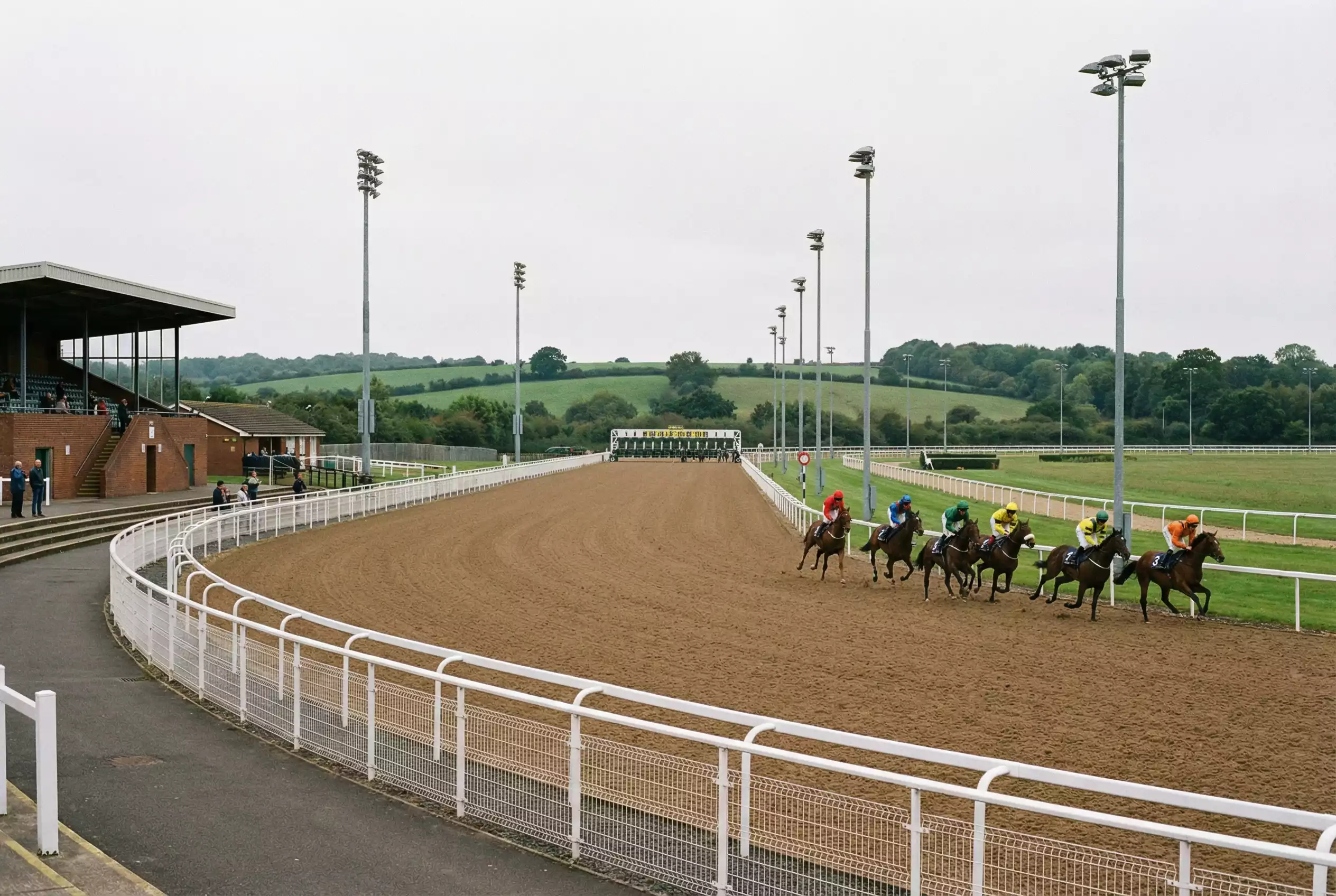
Racing Doesn’t Stop When Summer Ends
If you have watched horse racing on television during the winter months, you have probably seen all-weather racing without realising it was different from the turf events staged at Ascot or Newmarket in the summer. All-weather racing takes place on synthetic surfaces — artificial tracks designed to drain quickly, resist freezing, and provide consistent footing regardless of the British weather. It is the format that keeps the sport running year-round, and for a growing number of bettors, it is the format they encounter most frequently. What Is All-Weather Horse Racing? A Bettor’s Introduction — More on this topic at wolverhampton race betting.
Wolverhampton is one of six all-weather racecourses in Britain, and for beginners it is often the first point of contact with AW racing — its midweek evening cards are streamed live by every major bookmaker, the fields are competitive, and the racing is accessible. Understanding all-weather racing for beginners means knowing what makes these tracks different from turf, why the calendar is structured the way it is, and how the betting dynamics shift when the ground beneath the horses changes from grass to synthetic material.
What Makes All-Weather Different from Turf
The fundamental difference is the surface. Turf racing takes place on grass, where the condition of the ground — known as the “going” — changes with the weather. A dry spell produces fast ground; sustained rain turns it soft or heavy. These variations affect how horses move, how fast they run, and which types of horse are advantaged. All-weather racing removes that variable. The synthetic surfaces used at British AW tracks provide footing that is classified as “standard” or “standard to slow” at every meeting, meaning the going is essentially the same regardless of whether it has been raining, snowing, or baking in the sun.
Britain’s six all-weather tracks use two types of surface. Three of them — Wolverhampton, Newcastle, and Southwell — race on Tapeta, a composite of fibres, waxes, PVC, and sand. The other three — Kempton, Lingfield, and Chelmsford — use Polytrack, a different synthetic blend (Arena Racing Company). The distinction matters because form does not transfer perfectly between the two surface types. A horse that wins on Tapeta at Wolverhampton may not reproduce that form on Polytrack at Kempton, and vice versa. As a beginner, the simplest rule is to treat Tapeta form and Polytrack form as separate datasets and prioritise form on the same surface type when assessing a runner.
The track configurations also differ. Wolverhampton is a tight, left-handed oval roughly a mile in circumference with a short home straight. Newcastle is wider and more galloping. Chelmsford has a distinctive layout with long straights. Each venue rewards slightly different attributes in a horse, which is why course-and-distance form is more predictive on the all-weather than general form figures alone.
The All Weather Championships site provides profiles of each participating track, including surface type, layout, and key distances — a useful reference for anyone starting to navigate the AW landscape.
The All-Weather Calendar: Why It Matters
The AW calendar fills the gaps that turf racing cannot. The flat turf season in Britain runs from approximately April to November. During the winter months, the only flat racing available is on the all-weather, which means that from November through March the AW tracks — Wolverhampton chief among them — carry the entire flat racing programme. Wolverhampton alone stages more than eighty fixtures annually, many of them on midweek evenings under floodlights.
For beginners, this has a practical benefit: the AW calendar provides consistent, frequent racing that is easy to follow. Rather than waiting for a Saturday afternoon turf card with a handful of races, you can find racing at Wolverhampton on most Mondays and Wednesdays through the winter, with the same trainers, jockeys, and types of horse appearing regularly. This repetition accelerates learning — you start to recognise names, spot patterns, and build an intuitive understanding of the venue that takes much longer to develop at a course that races only a dozen times a year.
The AW season also has its own competitive structure. The All-Weather Championships run from October to April, with qualifying races at each AW venue building toward a Finals Day at Lingfield Park in the spring. This gives the winter programme a narrative that extends beyond individual meetings: horses accumulate points, trainers plot campaigns, and the form produced during the qualifying season carries forward to the climactic day. For a beginner bettor, following a horse’s progress through several Wolverhampton qualifiers is an accessible way to learn how racing form works in practice.
Summer AW racing exists too, though in reduced volume. During the turf season, AW fixtures continue but at a lower frequency and with generally weaker fields. The sport’s centre of gravity shifts to the turf tracks, and the all-weather becomes a secondary programme. For betting purposes, the winter months are the prime all-weather season — the fields are largest, the form is freshest, and the data is most useful.
How AW Betting Differs from Turf Betting
The most important difference for bettors is the elimination of going as a variable. On turf, the going can change the result of a race entirely — a horse that excels on fast ground may be useless on heavy — and assessing a horse’s going preference is a core skill. On the all-weather, the going is essentially fixed, which removes one layer of uncertainty but adds another: surface type becomes the variable instead. Does the horse handle Tapeta? Has it run on this specific synthetic before? These are the questions that replace the traditional going analysis.
Draw bias is more significant on all-weather tracks than on most turf courses. Wolverhampton’s tight oval produces measurable stall advantages at 5 furlongs and 1 mile that have no equivalent at a galloping turf venue like Newbury or York. Beginners who are accustomed to ignoring the draw on turf need to recalibrate: at Wolverhampton, checking the stall position is not optional in sprint or mile handicaps with large fields.
Speed figures are more reliable on the all-weather because the consistent surface reduces the noise in timing data. A horse that posts a fast time at Wolverhampton on a Monday evening can be meaningfully compared to a time it posted at the same venue three weeks earlier — something that is far less reliable on turf, where ground conditions change the value of every clock. For beginners, this makes speed figures a more accessible analytical tool on the AW than they are on grass. See also Do Favourites Win at Wolverhampton? Strike Rates by Distance.
Finally, the class structure of AW racing skews lower than the turf programme. The majority of all-weather fixtures are Class 4, 5, and 6 handicaps, maidens, and novice events. High-class racing is concentrated on the turf calendar. This means that form reliability is slightly lower on the AW — the margins between runners in a Class 6 handicap are narrow, and upsets are more frequent — but it also means that analytical edges, where they exist, are proportionally more valuable. The market is less efficient at the lower levels, which is precisely where the AW bettor operates most of the time.
