
 Available in US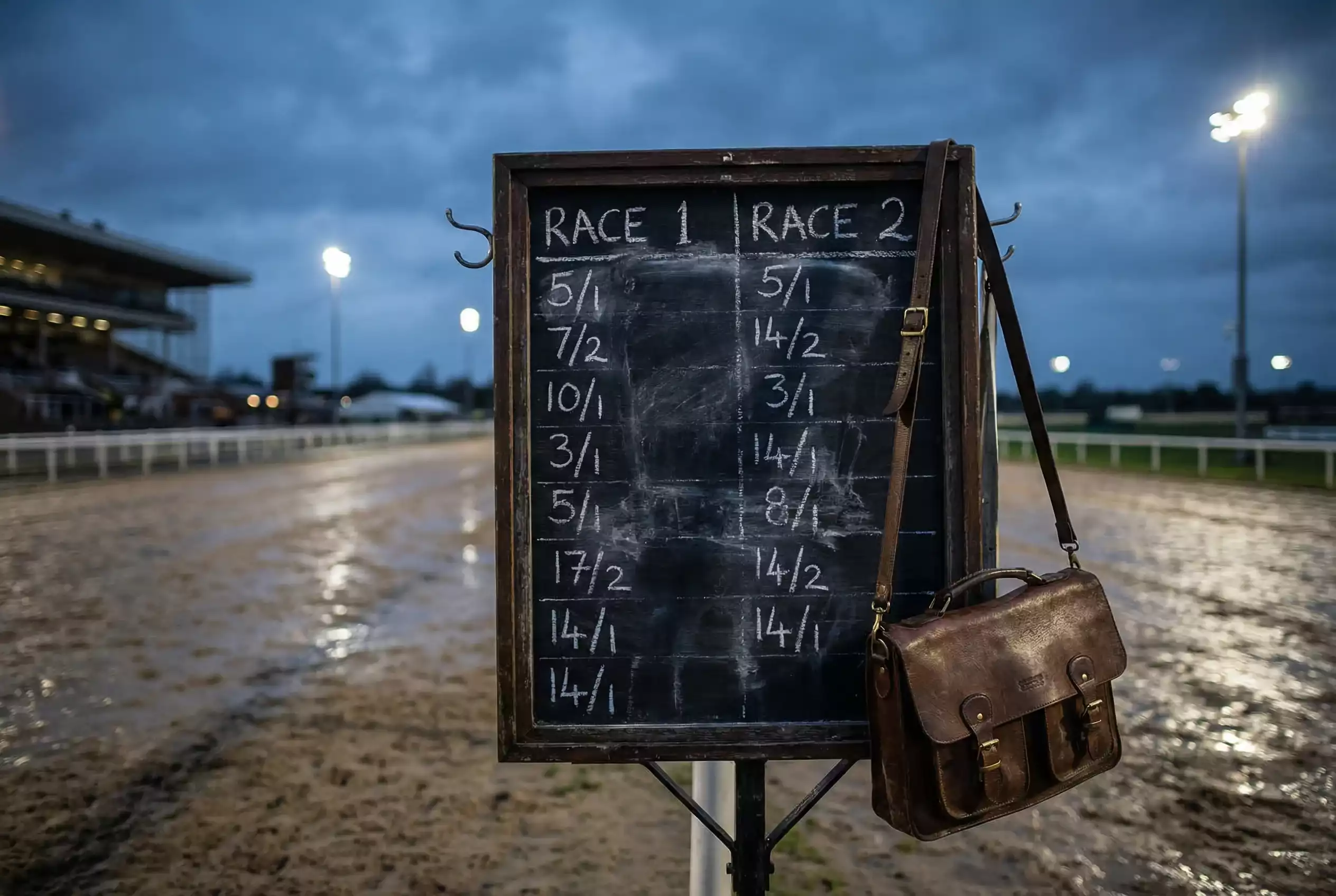
The Safety Net Most Punters Overlook
Best Odds Guaranteed is arguably the most valuable standard promotion in horse racing betting, and it is the one that the largest number of punters either ignore or fail to understand. The principle is disarmingly simple: if you back a horse at an early price and the starting price (SP) is higher, the bookmaker pays you at the better price. You take 5/1 in the morning, the horse drifts to 8/1 by the off, and you are paid at 8/1. The risk of price drift — one of the punter’s persistent enemies — is eliminated in a single feature. Best Odds Guaranteed — More on this topic at wolverhampton race betting.
In a market where off-course betting turnover on horse racing stands at £3.08 billion according to Gambling Commission data — a figure that has fallen 46 per cent since 2009 — BOG for Wolverhampton racing represents one of the few structural advantages available to the retail bettor. It costs nothing to activate, applies automatically at most major bookmakers, and is particularly relevant for all-weather racing where the evening-card markets often move significantly between the time the early prices are published and the off. Understanding how it works, where the policies differ, and when it adds the most value is straightforward but worthwhile.
How Best Odds Guaranteed Works
BOG applies to pre-race bets placed at fixed odds — the price quoted by the bookmaker — before the race starts. If the starting price at the off is higher than the price you took, the bookmaker upgrades your payout to the SP. If the SP is lower than the price you took, you keep your original price. In either case, you receive the better of the two numbers. The comparison is made automatically; you do not need to request it or opt in at most operators.
The starting price is determined by the on-course bookmakers at the track. It is the consensus price available in the betting ring at the moment the stalls open. For Wolverhampton evening meetings, the SP is formed by a smaller on-course market than at major Saturday fixtures, which means it can be more volatile — a single large bet in the ring can move the SP by several points. This volatility is precisely what makes BOG valuable at the venue: the probability of a meaningful price drift between morning odds and SP is higher on a midweek evening card than on a well-traded Saturday event.
There are conditions. Most bookmakers apply BOG only to bets placed at odds available through their platform — not to bets placed at the SP itself. If you choose “SP” as your price when placing the bet, BOG does not apply because there is no early price to compare against. Some operators set a maximum payout under BOG terms, particularly for high-stakes wagers, but for the vast majority of recreational bettors this cap is never reached. A few bookmakers exclude certain race types — typically ante-post markets or races where early prices are not offered — from their BOG coverage.
The mechanics also differ when BOG interacts with other promotions. A free bet used on a horse that benefits from BOG may or may not receive the enhanced payout depending on the operator’s terms. Similarly, odds boosts and price promises sometimes operate independently of BOG. Reading the specific terms of your bookmaker’s BOG policy — a two-minute exercise — removes ambiguity before you discover a discrepancy in your returns.
BOG Policies Compared: Which Bookmaker Pays Most
All the major UK bookmakers offer BOG on horse racing, but the scope and generosity of their policies vary in ways that affect the practical value for a Wolverhampton bettor. The differences cluster around three dimensions: which races qualify, when the bet must be placed, and whether there are payout limits.
bet365 applies BOG to all UK and Irish racing, including every Wolverhampton fixture. The promotion is automatic for bets placed at fixed odds from the morning markets onward, with no requirement to take the price at a specific time. There is no publicly stated maximum payout under the BOG terms for standard accounts. For a Wolverhampton regular, bet365’s BOG is comprehensive and hassle-free.
Betfair’s sportsbook offers BOG on UK and Irish racing under similar terms to bet365. The exchange side does not have BOG because the prices are set by the market rather than by Betfair, but the sportsbook product — where Betfair acts as a traditional bookmaker — includes it. One distinction is that Betfair occasionally limits BOG availability for accounts that have been flagged as consistently profitable, a practice that is not unique to Betfair but is more openly acknowledged in exchange-betting circles.
Betfred’s BOG applies to all UK and Irish racing and is available from when early prices are first published, typically the morning of the race. The operator has historically been one of the more generous with BOG, extending it to enhanced-odds selections and price-boost bets in some cases — a nuance worth checking on the day. BetVictor offers BOG under broadly standard terms, with automatic application to fixed-odds pre-race bets on UK and Irish racing.
The practical difference between operators on BOG is often marginal for a single bet. Over a season of regular Wolverhampton betting, however, the cumulative effect of a slightly more generous policy — one that includes enhanced-odds bets, has no stated cap, and applies from the earliest morning prices — adds up. Choosing a bookmaker with the broadest BOG terms is one of the few decisions that costs you nothing and consistently pays back.
When BOG Adds Real Value at Wolverhampton
BOG adds the most value in situations where the early price and the SP are likely to diverge, and Wolverhampton’s evening card profile creates exactly those conditions. Midweek evening meetings attract less pre-race betting volume than Saturday afternoon fixtures at major tracks, which means the prices are less efficiently formed in the morning and more susceptible to late movement. A horse that opens at 6/1 in the morning prices for a Wednesday evening race at Wolverhampton has a higher probability of drifting to 8/1 or 10/1 by the off than the same horse would at a Saturday Ascot fixture where thousands of pounds of informed money have already shaped the price.
The specific scenarios where BOG delivers the biggest uplift at Wolverhampton are predictable. Horses trained by smaller yards that are not on the radar of the major tipsters often open at a reasonable price in the morning and then drift as the market firms up around more fancied runners. If your analysis identifies one of these horses as a genuine contender — strong course form, favourable draw, fit profile — taking the morning price with BOG protection is an optimal play. You lock in a price that reflects the horse’s current market standing, and if the market subsequently dismisses it further, you benefit from the higher SP.
The reverse scenario — where the horse shortens from morning price to SP — is neutral under BOG. You keep your original price, which was the price you were happy to bet at. BOG does not penalise you for taking an early price on a horse that proves popular; it simply does not add value in that direction. This asymmetry is the entire point: BOG eliminates the downside of early-price betting while preserving the upside. See also Wolverhampton Live Streaming and Racecard Sources.
In a betting market where turnover on horse racing has fallen by 4.3 per cent in the past year alone, operators are under pressure to retain customers, and BOG is one of the tools they use. For the Wolverhampton bettor, the implication is to use BOG consistently — take early prices whenever you have a genuine opinion, secure in the knowledge that if the market moves against you, the bookmaker absorbs the difference.
