
 Available in US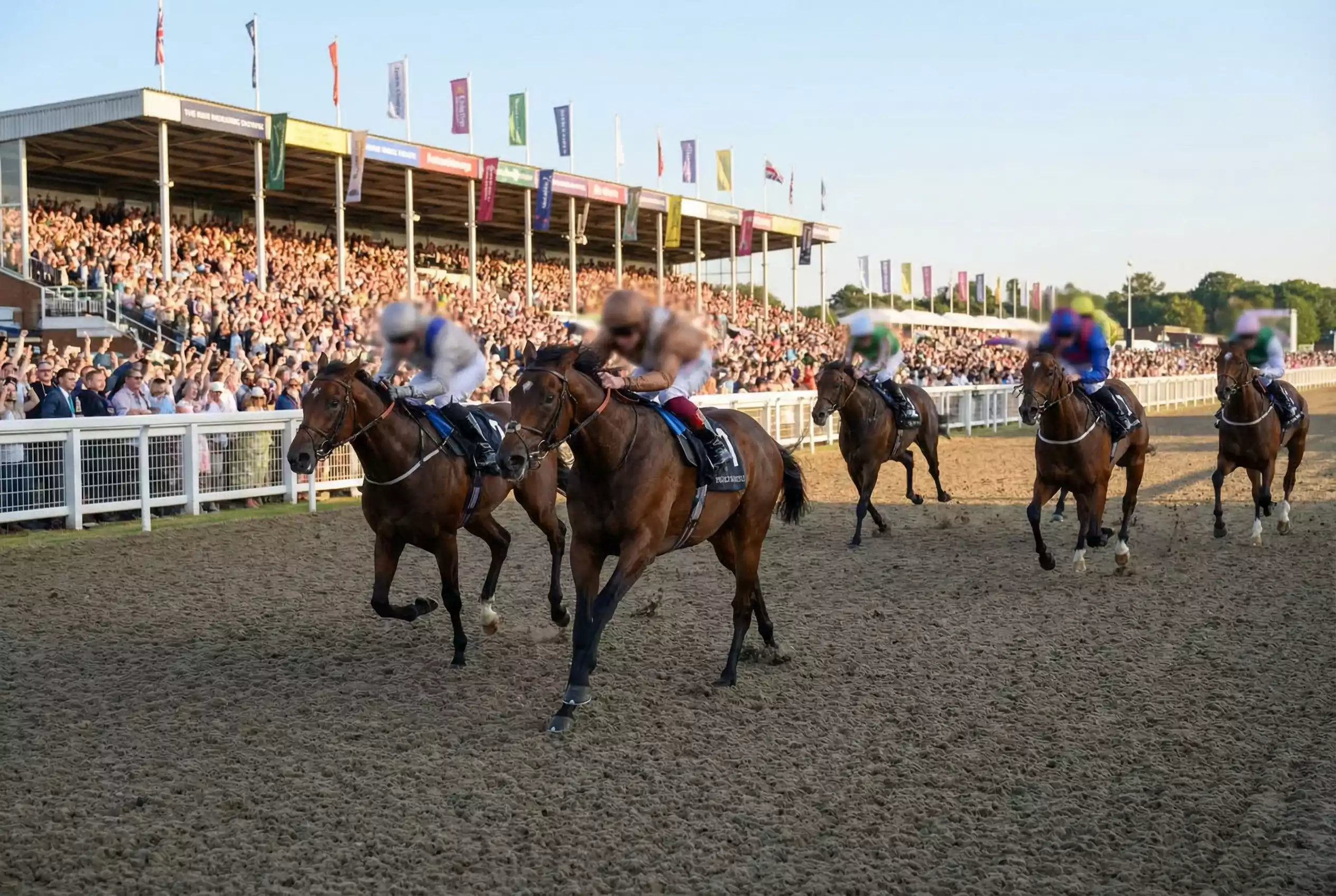
The Crown of the All-Weather Season
The All-Weather Championships are the culmination of the British AW racing season — a structured competition that runs from October through to a single climactic Finals Day in the spring. For a sport that sometimes struggles to sell the all-weather product as anything more than a winter filler, the Championships give the programme a narrative arc, a purpose, and a prize fund that demands attention. They also give bettors a richer context for assessing Wolverhampton runners, because many of the horses competing at Dunstall Park through the winter are accumulating qualification points toward a place on Finals Day. All-Weather Championships — More on this topic at wolverhampton race betting.
Understanding the All-Weather Championships explained in full — the format, the qualification routes, and the betting dynamics of Finals Day itself — turns the winter programme from a series of disconnected midweek cards into a connected story. A horse that wins a qualifier at Wolverhampton in January is not just banking prize money; it is building toward an entry at the richest all-weather meeting in Europe. That ambition shapes how trainers prepare their horses, which races they target, and how aggressively they ride — all of which is visible to the punter who knows what to look for.
Championship Format and Categories
The All-Weather Championships operate across six distance categories, each with its own championship title: sprint, mile, middle distance, long distance, stayers, and fillies and mares. Each category has a defined set of qualifying races staged at the six UK all-weather tracks — Wolverhampton, Newcastle, Chelmsford, Kempton, Lingfield, and Southwell — throughout the season. In addition to the main Championship, the AW Vase fixture at Lingfield Park on Good Friday carries a prize fund exceeding £390,000, providing a secondary target for horses that accumulate strong AW form without necessarily topping the Championship standings.
The season typically runs from late October to early April, with qualifying races distributed across the calendar. Wolverhampton hosts a significant share of qualifiers because its fixture count is among the highest of the AW venues. In a typical season, several Wolverhampton races each month carry Championship points, and the cards that include qualifiers tend to attract stronger fields than standard midweek fixtures.
The Championship format creates an incentive structure that benefits the informed bettor. Trainers with a horse that has accumulated points through the winter may run it in a Wolverhampton qualifier to secure a Finals Day spot, even if the race conditions are not ideal. Conversely, a horse with no realistic Championship ambitions may be more lightly campaigned in qualifiers, with its target elsewhere. Reading the Championship context — which horses are in contention, which need another qualifying run — adds a layer of intelligence to the standard form analysis.
Finals Day itself brings together the top-pointed horses from each category for a single day of racing at Lingfield Park, usually held in late March or April. The event is the centrepiece of the AW calendar and has grown steadily in prestige since its inception, now attracting television coverage and a betting audience that extends beyond the regular AW fanbase.
How Horses Qualify: Points and Routes
Qualification for Finals Day is based on a points system. Horses earn points for finishing in the first four in designated qualifying races, with the number of points varying by the class and value of the race. A win in a Class 2 qualifier earns more points than a win in a Class 5, and placed finishes earn proportionally fewer points than victories. The top-pointed horses in each distance category at the end of the qualifying period receive an invitation to run on Finals Day.
The system creates a meritocratic pathway: the horses that perform most consistently across the season earn their place. But it also creates tactical considerations. A trainer with a horse that has accumulated enough points to qualify comfortably may ease off in the final qualifying weeks, saving the horse for Finals Day rather than risking injury or fatigue in a race that no longer matters for qualification purposes. A trainer with a horse on the bubble — needing one more placed finish to secure a spot — may target a weaker qualifying race at Wolverhampton to maximise the chance of picking up points.
For the bettor, these tactical dynamics are exploitable. A horse that “needs the run” for qualification purposes may be ridden more aggressively than the form suggests, while one that has already qualified may be given a quieter ride. Checking the Championship standings before assessing a qualifier at Wolverhampton adds context that the bare racecard does not provide. The standings are published on the All Weather Championships website and updated after each qualifying race.
Not all qualifying races are equal. Early-season qualifiers at Wolverhampton in October and November often attract exploratory entries — trainers testing horses on the AW surface to see if they take to it. Late-season qualifiers in February and March tend to attract more targeted entries from horses with genuine Championship ambitions. The quality and competitiveness of the field shifts accordingly, and so should the bettor’s approach.
Betting on Finals Day at Lingfield Park
Finals Day is the richest single day in British all-weather racing, with a total prize fund exceeding £1 million. As BHA Director of Racing Richard Wayman noted in the 2025 Racing Report, “our major meetings and races performed strongly” — and Finals Day is a prime example of an event that has grown in stature and betting interest year on year.
The betting market for Finals Day is distinctive. The field in each race is drawn from the best-pointed horses in the category, meaning the quality is significantly higher than a standard midweek AW card. Favourites tend to perform reasonably well — these are proven AW performers with strong recent form — but the competitive nature of the fields means that upsets are not uncommon. The each-way market is often where the value lies, particularly in the middle-distance and long-distance categories where the fields can be large and the racing is tactical.
Form from Wolverhampton is directly relevant to Finals Day at Lingfield, though the surface is an important distinction: Wolverhampton races on Tapeta while Lingfield uses Polytrack. A horse that has performed consistently at Wolverhampton through the winter carries form that the market respects, but the surfaces ride differently. The track geometry also differs: Lingfield is a wider, more galloping track than Wolverhampton’s tight oval, which means that horses who have benefited from Wolverhampton’s draw bias or its front-runner-friendly layout may not enjoy the same advantages at Lingfield. See also UK Horse Racing Industry.
The ante-post market for Finals Day opens weeks before the event and can offer value to punters who have followed the AW season closely. A horse that has accumulated points steadily through Wolverhampton qualifiers, handled the surface well, and finished the season in strong form may be available at longer prices in the ante-post market than it will be on the day. The risk is non-runners — a horse may pick up an injury or the trainer may decide against running — but the potential reward justifies a small speculative stake for punters who have done the groundwork.
