
 Available in US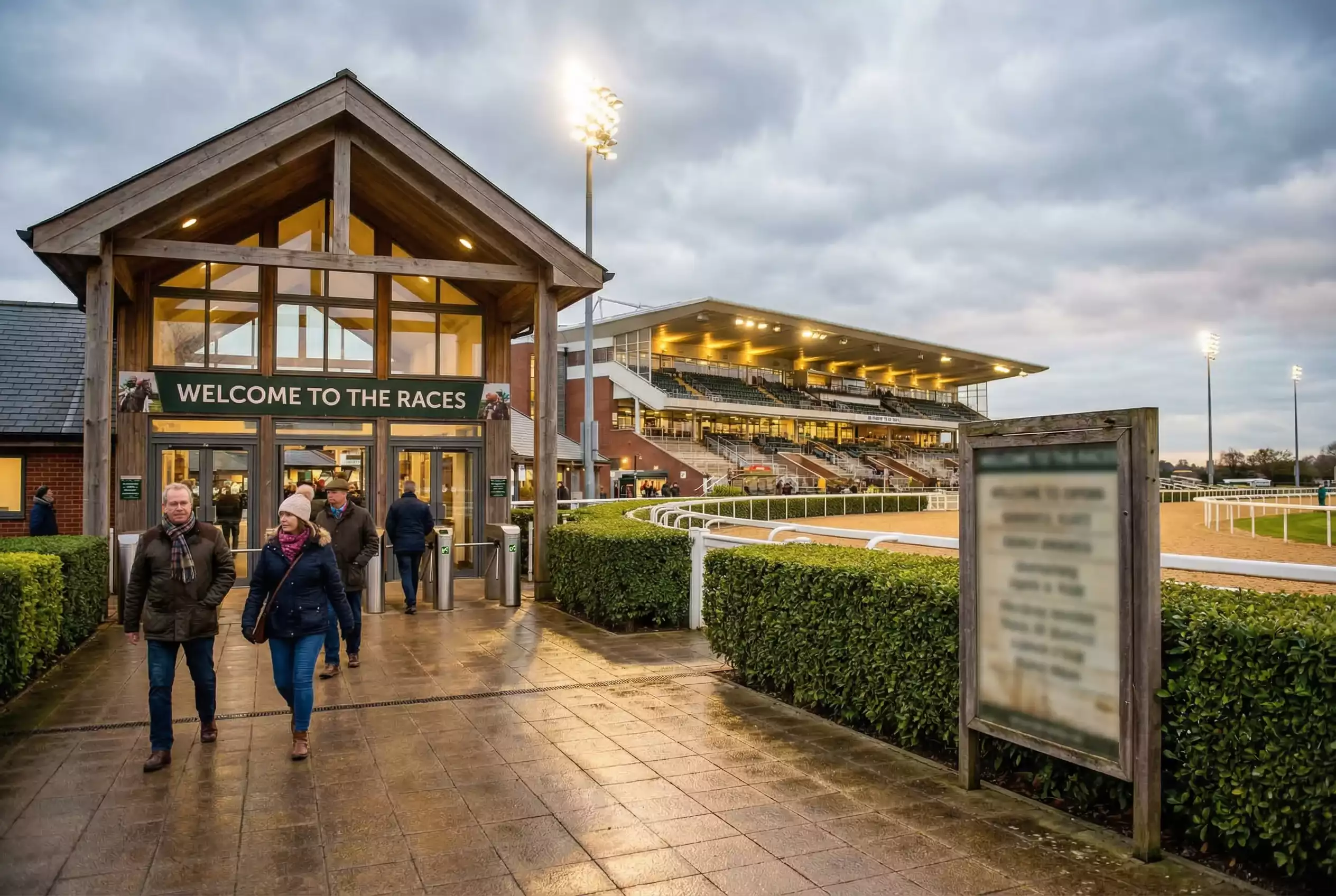
What to Expect When You Walk Through the Gates
Betting online is convenient. Visiting Wolverhampton on raceday is an experience. The two are not the same, and for anyone who has only ever watched Dunstall Park through a bookmaker’s live stream, the on-course atmosphere — the sound of hooves on Tapeta, the buzz of the betting ring, the view of the floodlit track on a winter evening — adds a dimension that no screen can replicate. Visiting Wolverhampton Racecourse — More on this topic at wolverhampton race betting.
Wolverhampton welcomes around 120,000 visitors a year across more than eighty fixtures, and it is part of the Arena Racing Company group that reported over one million racegoers across its venues in 2025 — a 15 per cent increase on the previous year. As Sam Cone of ARC noted, the growth reflects a genuine renewal of interest in the on-course experience. For the first-time visitor or the occasional racegoer, knowing what to expect before you arrive — how to get there, what the facilities offer, and how on-course betting works — removes the uncertainty and lets you focus on the racing itself.
Getting to Wolverhampton Racecourse
Wolverhampton Racecourse sits at Dunstall Park, off the A449 Stafford Road, approximately two miles north of Wolverhampton city centre. The postcode for satellite navigation is WV6 0PE. The location is accessible by car, train, and bus, though each route has its quirks.
By car, the racecourse is well signposted from the M54 motorway (junction 2) and the A449. On-site parking is available and free on most racedays, though busy fixtures — particularly Saturday meetings or special events — can fill the main car park, in which case overflow parking is directed to adjacent areas. Arriving thirty to forty minutes before the first race is usually sufficient to park and walk to the entrance without rushing.
By train, Wolverhampton railway station is the nearest mainline stop, served by West Midlands Trains, Avanti West Coast, and CrossCountry from Birmingham, London Euston, Manchester, and other major cities. From the station, the racecourse is roughly two miles away — a manageable taxi ride of five to ten minutes, or a bus journey on routes that serve the Stafford Road corridor. On busy racedays, ARC sometimes arranges shuttle buses from the station, but this is not guaranteed and should be checked in advance.
Local bus services along the A449 pass close to the racecourse entrance. The 1 and 2 bus routes from Wolverhampton city centre are the most direct. For evening meetings, check the last bus time before committing to public transport — services thin out after 9pm on midweek evenings, and the last race may finish after the final bus has departed. Taxi firms in the city centre are familiar with the racecourse location, and ride-hailing apps operate in the area, making the return journey straightforward even after the last race on a late card.
Enclosures, Bars, and Facilities
Wolverhampton operates a single main enclosure rather than the tiered system of premium, members, and public enclosures found at larger courses like Ascot or Cheltenham. Admission prices are modest, and general admission gives access to the grandstand, the viewing areas along the home straight, and the paddock where horses are paraded before each race. For midweek evening meetings, the admission charge is typically under £15 — sometimes less if booked online in advance.
The grandstand was rebuilt after the 2004 fire and provides covered viewing across the home straight with a reasonable sightline to the final bend. On cold winter evenings under the floodlights, the covered areas are a practical necessity rather than a luxury. The ground floor hosts the main bar and fast-food outlets. The upper levels offer restaurant dining and hospitality packages that include a table, a meal, and drinks — suitable for a group outing or a more relaxed experience but not essential for the casual visitor.
The paddock is open to all racegoers and is worth visiting before each race. Assessing a horse in the flesh — its coat condition, its demeanour, how it moves on the walk around the parade ring — is an additional input that the form book cannot provide. Experienced punters develop a feel for which horses look well on the day, and the paddock is where that visual assessment happens. On a compact card with six or seven races, it is practical to visit the paddock before every event.
The on-site hotel — currently 54 rooms, with a planned expansion to 170 as part of the racino development — offers the option of staying on site for an evening meeting and leaving the next morning. For visitors travelling from a distance, this avoids the issue of late-night driving or public transport limitations after the last race.
Betting On-Course: Tote, Bookmakers, and Tips
On-course betting at Wolverhampton offers two distinct channels: the Tote and the independent on-course bookmakers. Each has advantages, and the experienced racegoer often uses both depending on the race and the type of bet.
The Tote operates pool betting — your money goes into a pool with all other Tote bettors, and the payout is determined by dividing the pool among winners after the Tote’s deduction. At Wolverhampton, Tote windows are located in the grandstand and around the enclosure. The main Tote products are Win, Place, Exacta (first and second in correct order), Trifecta (first three in correct order), and the Placepot. Pool sizes at midweek evening meetings are smaller than at major Saturday fixtures, which means the Tote odds can swing more dramatically based on how the money falls. This creates occasional value — particularly in the Exacta and Trifecta pools, where a contrarian result can produce a large payout from a modest pool.
On-course bookmakers set their own odds and stand in the betting ring near the parade ring. The prices on the boards are negotiable: if you are betting cash in hand, you can sometimes secure a slightly better price than the displayed odds by asking. On-course bookmakers also offer the advantage of tax-free betting — the on-course market does not deduct the standard margin in the same way that a fixed-odds online bet does, though the difference is built into the prices offered. See also Wolverhampton Fixture List and Seasonal Racing Patterns.
For the visitor who normally bets online, the on-course experience requires a small adjustment in mindset. Prices move faster in the ring than on an app, and the odds you see on the boards can change between walking to the window and placing your bet. Arriving at the betting ring early — at least five minutes before the off — gives you time to assess the market, compare the Tote indicative odds with the bookmaker boards, and decide which channel offers the better deal for each specific bet. It is a more engaging process than tapping a screen, and for many racegoers it is the best part of the day.
