
 Available in US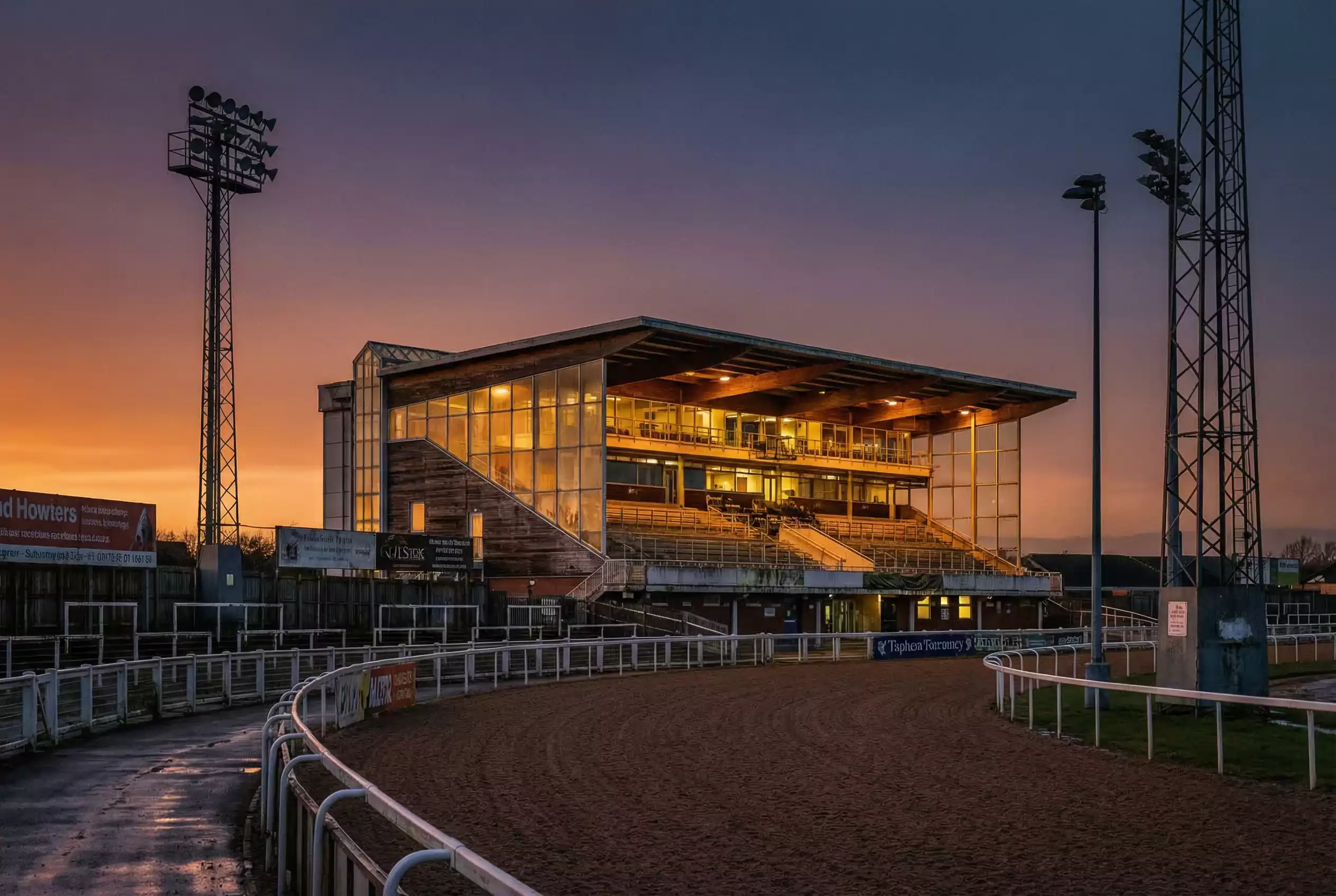
A Track That Keeps Reinventing Itself
Most British racecourses settle into a rhythm and stay there for decades. Wolverhampton has never been that kind of track. Since the modern course opened at Dunstall Park in 1993, it has been a pioneer, a survivor, and an ongoing experiment in what a racecourse can be. It was the first venue in Britain to stage racing under floodlights, the first to install a Tapeta surface, and it is now on course to become the country’s first racino — a combined racecourse, casino, and entertainment complex. The story of Wolverhampton racecourse is not a gentle progression from past to present; it is a series of reinventions, each driven by a willingness to try things that no other British track has attempted. Wolverhampton Racecourse History — More on this topic at wolverhampton race betting.
Understanding that history matters for the bettor as well as the racing fan. The decisions made at Wolverhampton — to go all-weather, to invest in floodlights, to switch surface technology — have shaped the racing product that exists today. The track’s characteristics, its fixture profile, and the type of horse that thrives there are all consequences of choices made over three decades. Context does not pick winners, but it explains why the course behaves the way it does.
Dunstall Park: Origins and Early Years
Horse racing at Wolverhampton predates the current venue. The city hosted racing at various locations from the nineteenth century, but the modern era began in 1993 when the purpose-built Dunstall Park track opened as an all-weather racecourse. The site, in the Whitmore Reans area of the city, had previously been associated with greyhound racing — a connection that would re-emerge decades later.
The decision to build an all-weather track was itself a gamble. In the early 1990s, all-weather racing was a new concept in Britain, viewed with suspicion by much of the racing establishment. The surfaces available at the time were crude compared to modern synthetics, and the quality of horse attracted to all-weather meetings was modest. Wolverhampton’s founders bet that a venue offering racing year-round, regardless of weather, would find an audience — and they were right, though the path was far from smooth.
The original surface was Fibresand, a mixture of sand and fibrous material that provided a functional but imperfect racing surface. Fibresand drained well and allowed racing through the winter, but it was harsh on horses’ joints and produced running times that bore little relation to turf form. Trainers and jockeys tolerated it rather than embraced it, and the racing it produced was often regarded as second-tier. The track’s early reputation was built on accessibility and year-round availability rather than the quality of its product.
Arena Racing Company (ARC) acquired Wolverhampton as part of its growing portfolio of racecourses, providing the financial backing that would fund the venue’s subsequent transformations. Under ARC’s ownership, Wolverhampton began its transition from a functional winter venue to something more ambitious.
Key Milestones: Floodlights, Fire, and Tapeta
The installation of floodlights transformed Wolverhampton’s identity. When the venue became the first British racecourse to race under lights, it opened a scheduling window that no other track could match. Evening meetings on midweek cards attracted a new audience — punters finishing work, casual racegoers looking for an evening out, and the betting market looking for content beyond the afternoon programme. The floodlit card became Wolverhampton’s signature product, and it remains so today.
In 2004, the Fibresand and turf tracks were replaced by a single Polytrack surface, and the venue moved to hosting flat all-weather races only. The hotel and conference facilities were refurbished alongside the track work, expanding the venue’s commercial appeal beyond racedays. This period, under the ownership of Arena Leisure (which had acquired the course in 1999), cemented Wolverhampton’s identity as a dedicated all-weather flat racing venue.
The most consequential change came in 2014 when Wolverhampton replaced its Polytrack surface with Tapeta — the first British racecourse to adopt the technology. The switch was a step-change in the quality of racing. Tapeta — Michael Dickinson’s synthetic composite of fibres, waxes, PVC, and sand — provided a surface that was safer, more consistent, and better suited to producing competitive, form-reliable racing. Times became more meaningful, injury rates improved, and trainers began sending better horses to the venue. The form book at Wolverhampton gained credibility, which in turn attracted more betting interest and larger fields.
The Tapeta installation was not a one-off event. The surface has been maintained and updated through multiple iterations, with the current Tapeta 10 representing the latest version. Each iteration refined the composition and depth of the surface, incorporating data from tracks worldwide. Wolverhampton’s willingness to invest in surface technology has kept it at the forefront of all-weather racing in Britain, and the fact that three of the six UK all-weather venues now use Tapeta owes something to Wolverhampton’s successful early adoption.
Greyhound Return and the £26 Million Racino Vision
The latest chapter in Wolverhampton’s story is arguably the most ambitious. In September 2025, greyhound racing returned to Dunstall Park, making Wolverhampton the only racecourse in the United Kingdom that hosts both horse racing and greyhound racing at the same venue. The dual-format operation is unique in British racing and reflects the venue’s continuing appetite for diversification beyond the traditional racecourse model.
The greyhound track shares the site with the horse racing oval but operates on a separate schedule, with greyhound meetings typically held on days when there is no horse racing. The addition extends the venue’s active calendar and brings a different audience — one that overlaps partially with the racing crowd but also includes a substantial number of greyhound-specific fans. For ARC, the dual venue is a commercial play that increases the number of revenue-generating events per year without competing directly with the horse racing programme.
More striking is the planned £26 million “racino” development — the first of its kind in Britain. The project envisages expanding the existing hotel from 54 to 170 rooms, constructing a casino on site, and creating an integrated entertainment complex that combines racing, gaming, dining, and accommodation. The concept is modelled on successful American racino operations where racetracks combine live racing with casino gaming, drawing a broader audience than either product could attract independently. See also Visiting Wolverhampton Racecourse.
For the racing purist, the racino concept may seem like a distraction. For the bettor, it signals continued investment in the venue. A racecourse backed by a £26 million development commitment is not a venue at risk of closure or decline — it is one that expects to grow. That financial security underpins the racing programme, the surface maintenance, and the fixture count that make Wolverhampton a viable year-round betting venue. Whatever one thinks of the casino addition, the effect on the racing product is likely to be positive: more money, better facilities, and a course that continues to evolve rather than stand still.
